
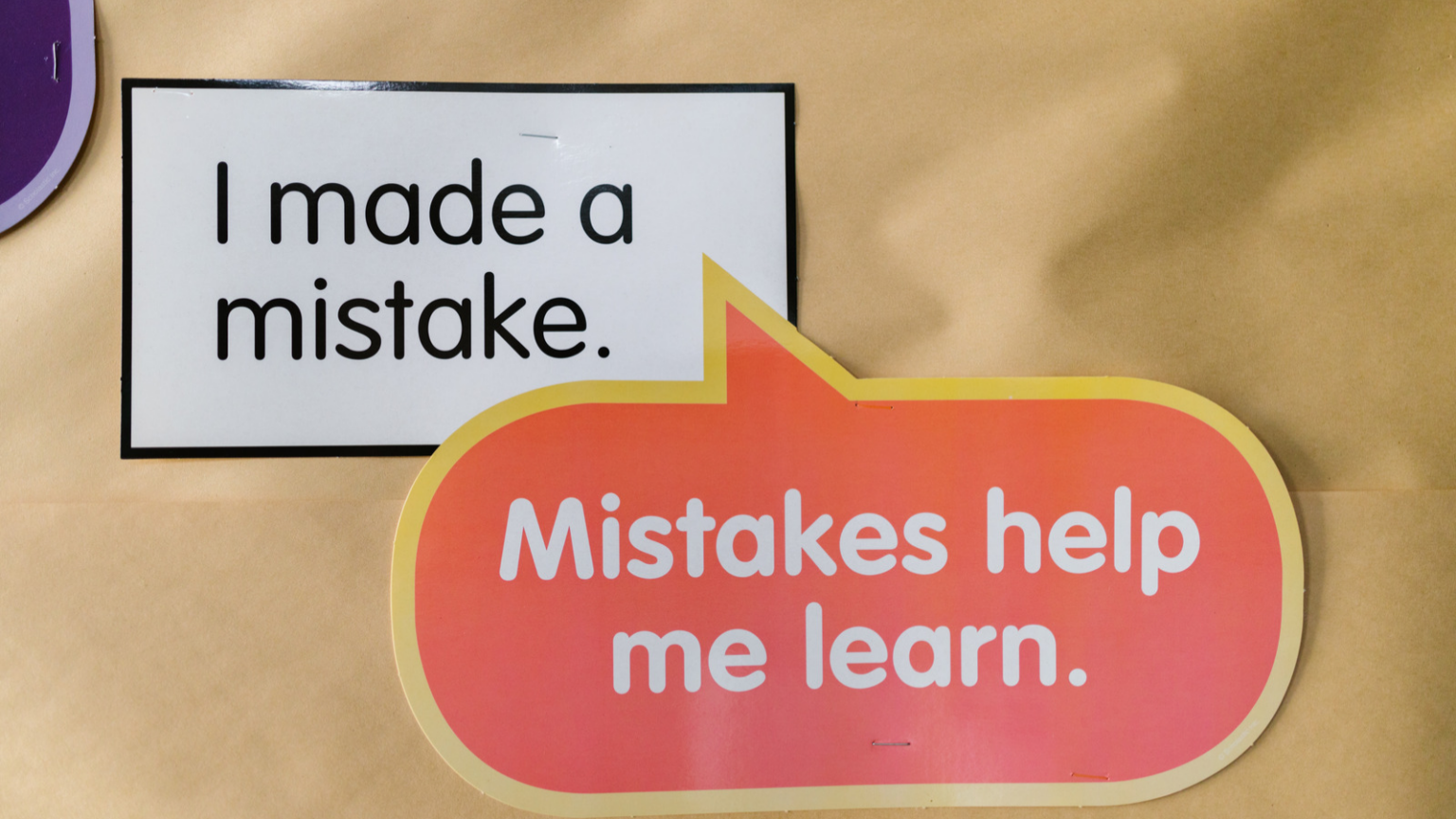
There are so many things that shape a student-teacher relationship. In a perfect world, every student we came across would be a perfect match. Our humor would click, our pace would line up, we would get along beautifully, and every lesson would be filled with wonderful conversations.
That is just not the case.
Especially when it comes to language learning, where there is already an obstacle working against us: communication itself. As the teacher, it is our job to figure out the best way to move forward and build the kind of relationship where we can teach comfortably, the student can learn comfortably, and all of those good things have a chance to happen.
Error Correction Techniques – A Primer

Why Correction Can Disrupt a Lesson
One thing I’ve seen create some of the most awkwardness, kill a conversation, or interrupt the natural ease of a session is the moment when it comes time to correct a student.
I’ve rarely had a student react to correction exactly the way I would hope: with complete openness, without feeling embarrassed, simply taking the correction, applying it, and then continuing the conversation as naturally as before, assuming, of course, that it was going well to begin with.
Most students react in one of a few more familiar ways. They apologize, become quieter or more hesitant, start second-guessing what they say, or retreat to safer words and sentence structures they already know they can use correctly.
And what do we do as teachers? Once we notice that reaction, we have to backtrack and address it. Now we’re taking time out of a lesson they’re paying for, time that could be spent learning, and we’ve completely disrupted the flow of the session.
Concept Checking Questions – Yes or No?
The Conversation to Have Before the First Lesson
I’ve found one thing that has eliminated this issue more often than not: talking about it beforehand.
Not the corrections themselves. The mistakes.
Discussing how corrections will be handled before lessons begin is pretty typical. Most teachers will ask something like, “How do you prefer to be corrected?” and then give the student a few options.
I’m not saying we shouldn’t do that. We absolutely should.
But before that conversation, there needs to be another one about the mistakes themselves: what they are, what they mean, and how we are going to treat them when they happen.
For example:
“I expect you to make mistakes. In fact, I want you to. Once a mistake happens, we’ve found something we can work on. If you never make one, I have no way of knowing what you need help with.”
Teach English in Japan with Jobs in Japan
Talk to Adult Learners Like Adults
This conversation helps, but there is more to it that matters just as much: how it is delivered.
With adult learners, you are often teaching a peer. Sometimes that person is a professional, has gone to college, or is highly accomplished in other areas of life. Being taught how to speak can already make someone feel somewhat insecure or exposed because learning to speak is something we usually associate with children.
That insecurity can be very easy to trigger.
No matter what your teaching style is, strict, caring, lighthearted, or somewhere in between, none of that matters for this particular conversation. When you talk about mistakes, the delivery needs to be direct, matter-of-fact, and sincere.
Speak to the student as another adult.
If what you are saying sounds like something you would say to a child, you are probably not delivering it the right way. The goal is not to comfort the student because they made a mistake. The goal is to make mistakes feel normal, expected, and useful.
None of this means that teachers need to become cold. Your overall teaching style can still be caring, patient, encouraging, comforting, or lighthearted. This particular conversation simply works better when it sounds like a normal conversation between two adults.
Teaching Adult ESL – Some Tips
What to Say Beforehand: Setting Expectations
Here are some things I say to my students. Feel free to use them or tweak them until they feel natural coming out of your mouth. As long as you cover your expectations around mistakes along with your expectations around correction, the only thing left to master is the delivery.
What to say beforehand:
- “I expect you to make mistakes. You actually need to make them, because once we find one, we know what we need to work on.”
- “Try not to stop in the middle of a conversation to ask me if a word is correct. Use it, finish what you’re saying, and we can come back to it afterward if we need to.”
- “If you make a mistake, that’s useful to me. Now I know there’s something we can work on.”
- “I still make mistakes in English, and I’ve spoken it my entire life. You’ll probably hear me make one at some point too.”
What to say during the lesson:
- “Good. Now we found one.”
- “There it is. That’s one we can work on.”
- “Keep going. I know what you meant. We’ll come back to that part.”
- “Don’t stop to ask if it’s correct. Finish what you were saying first.”
- “If you’re unsure about a word, use it anyway. Don’t stay with the word you know is safe just because you know it’s correct. You’ll probably be surprised by how often the word you were unsure about was the right one.”
- “You had the right word. Trust yourself and keep going.”
- “Try that again with this word instead.”
- “That one comes up a lot. Let’s fix it.”
- If the student apologizes: “No need to apologize. That’s what we’re here to find.”
- If they begin second-guessing themselves: “Don’t stop yourself. Finish what you were saying first.”
Make Mistakes Part of the Learning Process
The point is not to pretend the mistake did not happen or make a big effort to reassure the student afterward. It is to acknowledge it, treat it as useful information, and move on without allowing it to become the biggest moment of the lesson.
A mistake should never be the moment a student stops learning. When mistakes are expected, understood, and handled without shame, they become exactly what they should be: part of the process.
Think-Aloud Protocol in ESL: How Thinking Out Loud Improves Speaking Skills
Subscribe to the EFL Magazine Newsletter